The energy company that wants you to buy less electricity
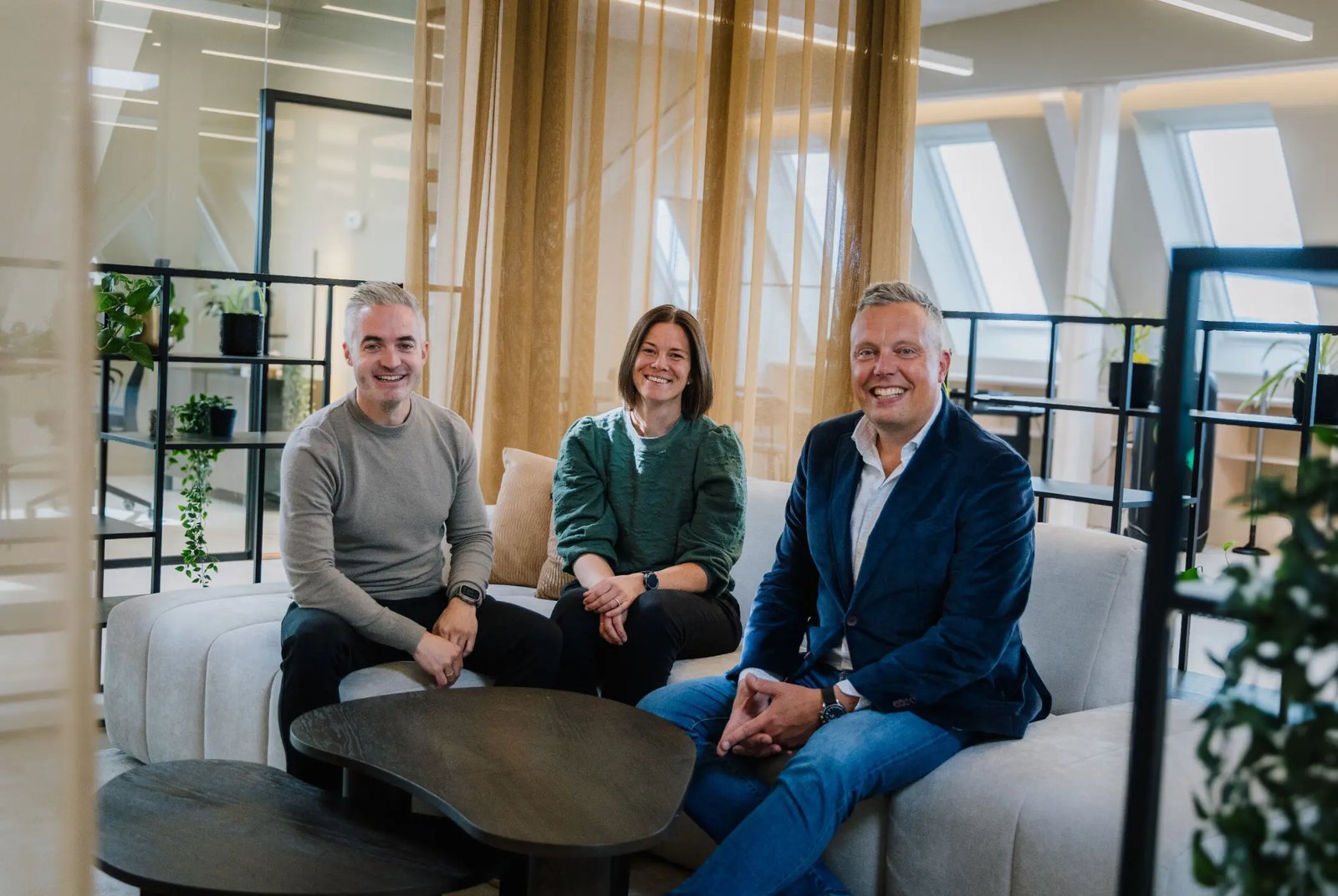
They’ve recruited a technical director from Toma, a project manager from one of Bergen’s largest plumbing firms and the head of communications from Entra. The company’s model is built on customers being willing to pay to cut their electricity use. That its own power sales fall at the same time is the whole point.
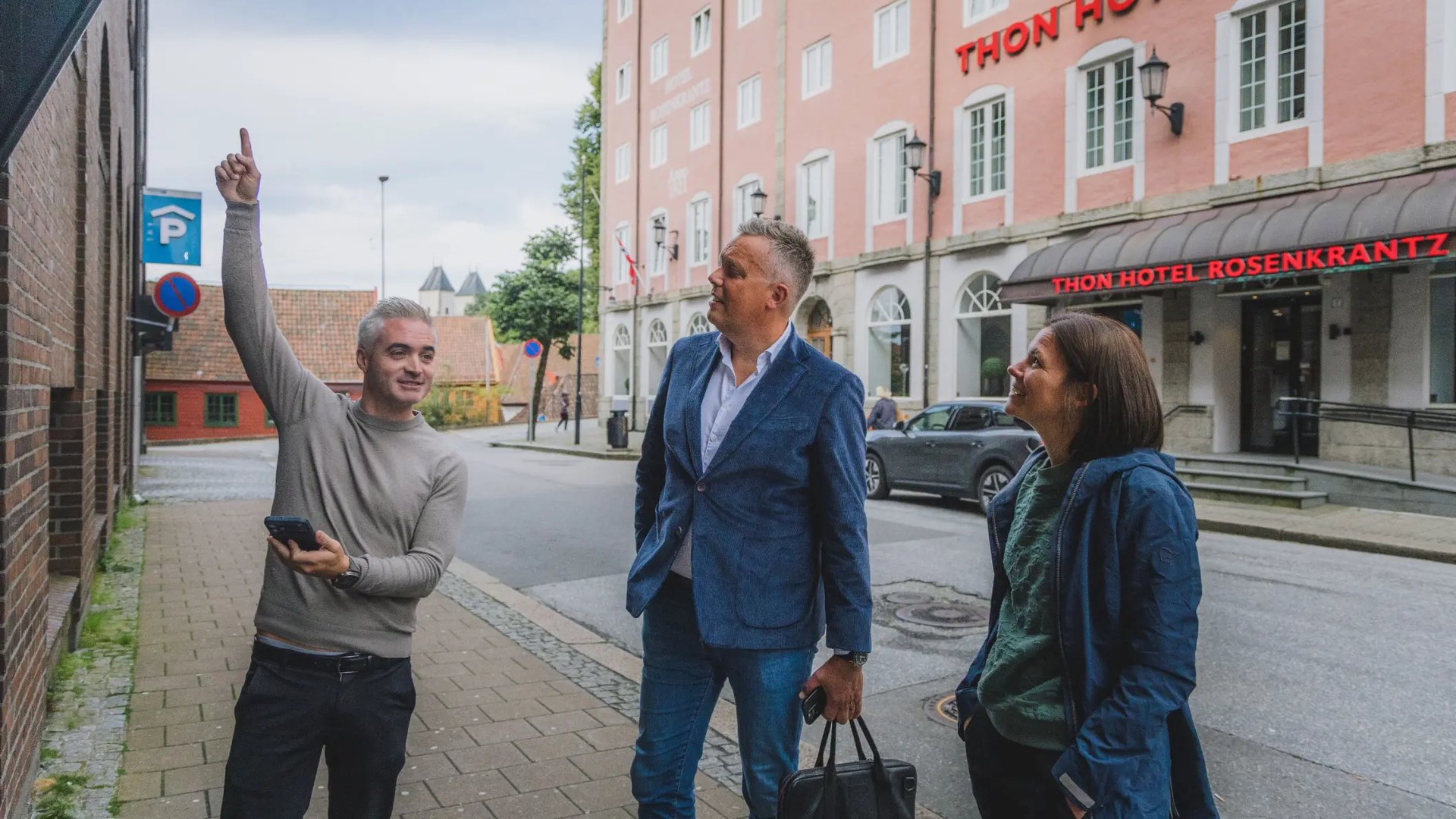
They’ve recruited a technical director from Toma, a project manager from one of Bergen’s largest plumbing firms and the head of communications from Entra. The company’s model is built on customers being willing to pay to cut their electricity use. That its own power sales fall at the same time is the whole point.
Noova CEO Even Gjesdal has just explained why an electricity company bought a technology and automation company, and leans back.
“The more we think about it, the more brilliant it actually gets.”
“I thought it was an electricity company full of tired people”
The year was 2023. Tommy Hagenes was running Energy Control out of Bergen and had just grown the company from NOK 10–11 million in revenue to 25 million, without hiring a single new person.
Noova wanted to talk. Hagenes didn’t.
“It wasn’t the right time to start talking about working together. I wasn’t done proving what I had to prove.”
Nor was it the price tag that stopped him.
“I didn’t understand what Noova was. I thought it was an electricity company full of tired people.”
Talks resumed around March 2025. By then, Energy Control had passed NOK 40 million. In October, Hagenes sold all his shares for NOK 150 million, having first given away 16 percent of the company to four close colleagues.
Since the sale, he has continued as managing director of what is now Noova Energy Control.
“‘Sold’ is the wrong word for me. I’ve joined a journey! I’ve stepped into something new, with considerably more muscle.”
Familiar face, unfamiliar company

Hagenes has been part of NemiTek’s world for a long time: more than twelve years in building automation, from technician to department manager. He has managed Nordea’s properties in Bergen. From 2019, he went out on his own as a smart buildings adviser. He has served on the board of NemiTek’s Bergen branch.
Fewer people know Noova Energy Systems.
The company is based in Stavanger, has offices in Oslo, Bergen, Trondheim and Stockholm, and dates its origins to 2005. Last year, Noova Energi System AS had revenue of NOK 1.117 billion and an operating profit of NOK 42 million. The operating margin is below four percent, which is normal for a power retailer where almost everything is pass-through of purchased power.
In December, the Swedish fund Trill Impact bought the entire company. Finansavisen reported the valuation at around NOK 1 billion, roughly 24 times operating profit. Two months earlier, Noova had paid 19.5 times EBITDA for Energy Control.
Gjesdal won’t call the company an electricity company.
“We’re a complete energy partner. If someone calls us wanting cheap electricity, we’re not the place. If we don’t see that they’re interested in doing something about their carbon footprint, they’re not a customer for us.”
Isn’t it counterintuitive to turn down business?
“No. We’ve anchored this throughout the entire value chain, from ownership to employees. We’re on a purpose journey here.”
Losing money
Hagenes puts it bluntly.

“When we go into a building, we reduce its energy consumption. That means Noova earns less money on that customer’s consumption. Personally, I think it’s pretty cool to lose money and actually want to.”
Gjesdal nods.
“The better job we do of reducing the customer’s energy consumption, the less we earn on the electricity itself. That’s why our business model is set up so that we also make money by helping customers use less.”
Earnings will also be strengthened through strong growth.
“We’re going to grow this company 40 percent a year.”
Every year?
“Every year. And we’re only scratching the surface of what’s possible.”
Where innovation dies
Hagenes has seen the same thing in building after building for more than a decade.
“You’re in a building and you know you can save several hundred thousand kroner, and you can see the payback time is one year. But then it stalls over who’s going to pay the bill. Is it the landlord or the tenant? And then innovation dies.”
The challenge is often that the landlord ends up paying for the measure while the tenant gets the savings. So neither has anything to gain by going first. The problem has been discussed at conference after conference without being solved.
Noova sits on both sides of that equation. It supplies the electricity to the building and can allocate and invoice energy costs on to tenants. Hagenes believes that position opens up something other than pitching a measure to the landlord and hoping for a yes.
He starts to describe how, then stops himself.
“I don’t know if we dare share this here. This is our trade secret.”
What he will say is that the answer lies in how buildings already pay for everything else.
“How do tenants pay for the building? They have an ongoing monthly cost. How do we pay for refurbishment? Actually matching the cash flow to the building’s cost side is so brilliant and so simple. And yet nobody does it.”
The comparison he uses comes from outside real estate.
“Nobody buys a server anymore. You buy Teams licences as a monthly cost, you buy Netflix. That’s really the same thing we’ve figured out for buildings. It’s about mirroring incoming and outgoing cash flows.”
Ida Kristin Schlotterbeck, Senior Communications Manager at Noova, says it’s about understanding the customer’s own customers.
“It’s not just one customer. Often it’s a customer who has customers. So this is about our tenant billing model and understanding a tenant’s customer journey.”
Hagenes won’t say more about how they plan to use it.
“What we’re doing is pretty mind-bending. It’s unconventional in so many ways.”
The people they’ve recruited
Noova has grown from 25 employees when Gjesdal took over to more than 65 across the group. Energy Control went from 6 to 15 in a year.
Many of them are well known to NemiTek members.
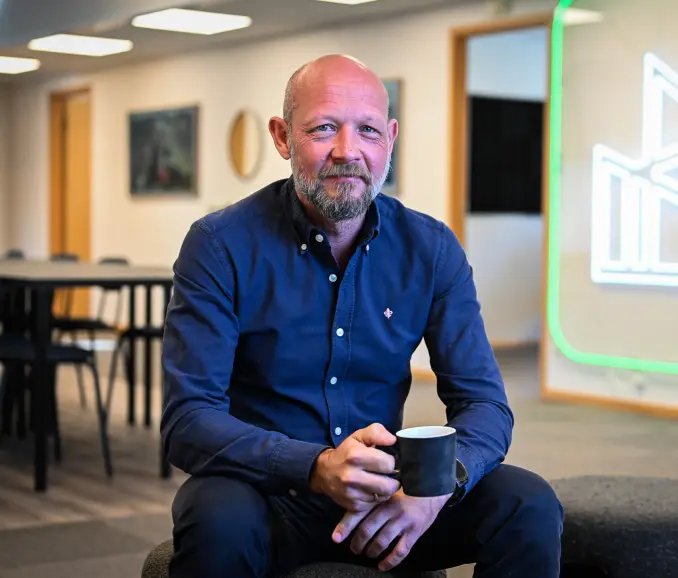
Endre Johannessen spent twelve years at Toma Eiendomsdrift, the last four as technical director and before that as head of quality and innovation. He bought Energy Control’s technology, installed it in the buildings he operated and served as a reference customer. In May, he became chief operating officer of Energy Control and the company’s first employee in Stavanger.
“We’ve worked well together, both as colleagues and as customer and supplier. So I know the technology well and know what the company delivers,” he said when the appointment was announced.
On why he left after twelve years:
“I’m becoming a grown man, and I could certainly have just coasted into retirement on the knowledge and experience I have. I’ve done and achieved a lot at Toma, but I want new challenges.”
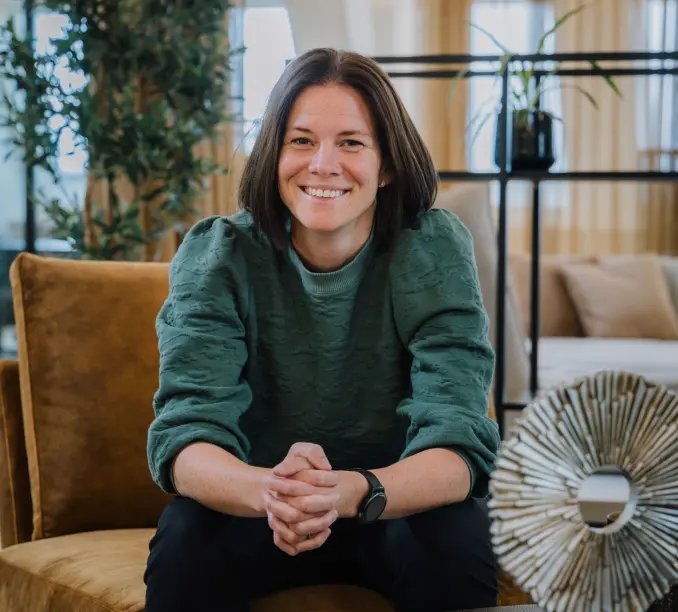
Mari Tenden came from Å Insite, which installed sub-meters and supplied energy data.
“It was Tommy who introduced me to proptech, and it was André who taught me about buildings and controls. And suddenly we’re colleagues,” she says.
André is André Løvlund, one of the company’s advisers with a building services background. He was recruited from the consultancy Entro, where he was known as a hands-on expert in energy efficiency. He has previously given talks at NemiTek events and has long experience with operational optimisation and energy efficiency.
None of the top executives come from the power industry.
“We come from oil and gas, which is far ahead on digitalisation, where you can digitalise something lying 3,000 metres under the sea. That’s much more complicated than buildings. There’s no logic in real estate lagging so far behind,” says Gjesdal.
Hagenes has his own image for the hires. He calls them his Ocean’s Eleven, where each person has a defined speciality in a heist planned in advance.
So who is he himself? Brad Pitt?
There are nods and light laughter around the table. Still, there is some seriousness in the words too.
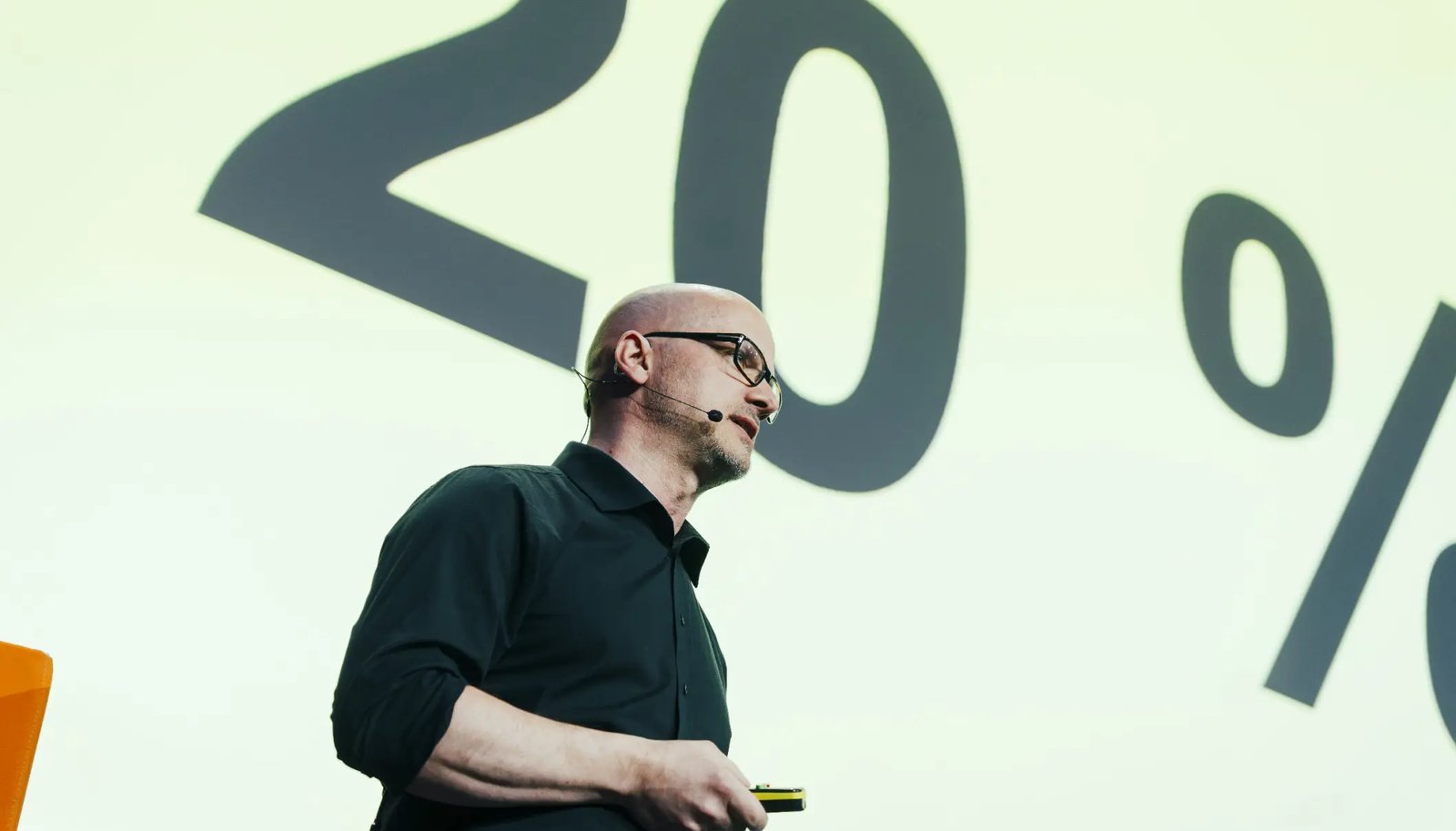
The enthusiasm and the way they talk is more reminiscent of a start-up than a staid electricity company.
The locomotives
Gjesdal describes what they saw when they started meeting the established players.
“Every day we meet the big locomotives in this industry. And they’re doing automation the way it was done 30 years ago. There hasn’t been any kind of innovation.”
That was where the two found each other, he says.
“That was sort of Tommy’s pick-up line. We want to challenge the big energy companies, and we want to challenge the big automation locomotives. We’re going to be the troublesome player.”
Hagenes is no gentler about his own industry.
“In 2026, with a new AI model every four weeks, we can’t sit around discussing whether a sensor should be wireless or not. To every other industry, it’s fascinating that we’re still talking about cable versus wireless.”
At the same time, he misses competition.
“I wish there were competitors out there, because we can’t keep up with demand. The world needs it. We’re going to be the best in Norway and the Nordics.”
Mari Tenden believes the passivity is shared by real estate and energy.
“People are extremely passive and reactive, and nobody dares say anything. Everyone knows what the future looks like, and nobody dares talk about it out loud.”
Schlotterbeck doesn’t want the blame put on building owners.
“It’s important that we don’t condemn the customer. The customer is focused on their business. The energy industry has made itself unnecessarily mysterious.”
The phone mast on the roof
Hagenes believes the next value driver for commercial buildings will be flexibility. He draws the analogy from an earlier chapter in the property industry.
“There was a revolution on the landlord side many years ago. They were asked if they wanted a phone mast on their building, and they were promised an extra 50,000 tomorrow. And every landlord stood on the rooftop shouting: I’ve got room for a mast on my building.”
He lets the point sink in for a moment.
“And what happened? The value of the building went up. Suddenly you had a cash flow they didn’t know was possible. The value of a building is tied to its cash flow.”
He believes the same will happen with loads that can be disconnected at short notice.
New technologies and markets make it possible for businesses to take a more active role in the energy system. Those who used to be primarily energy consumers can now create new revenue streams.
“I can switch off a load for 15 minutes at any time, you decide. We can turn off hot water tanks, we can turn down heating cables that act as thermal storage.
Your neighbour on the landlord side is going to do this.”
He is unsure about the thresholds, and says so himself.
“I need to double-check my quotes.”
Developments have come further than he suggested. Statnett reduced the minimum bid size in the activation market for tertiary reserves from 10 to 1 MW from 2 December last year. Elhub has been tasked with establishing a flexibility register for smaller, aggregated resources. Registration opened on 8 June this year, and from 17 August it became possible to prequalify small aggregated flexibility resources for the mFRR market.
The rain that didn’t fill the reservoirs
Outside the windows in Bergen, it has rained for most of the summer.
“It has rained every single day, and still the reservoirs are empty. It’s completely unreal,” says Hagenes.
At times, the electricity price averaged more than one krone through the summer months.
“You don’t need much prior knowledge to understand that the autumn will be brutal. Getting control of your energy consumption is no longer a nice-to-have. It’s something every company has to do.”
He has spoken with hotel directors and property managers who called in a panic in the winter of 2023.
“Can you come tomorrow? I don’t have time to wait a month. I have enormous sympathy for them. But now we know this.”
Gjesdal takes it further.
“Before long, the power surplus will be used up. Using electricity is going to become extremely expensive. If you’re not prepared for that reality, and it’s coming very fast now, you disqualify yourself.”
Hagenes has one answer left, to the question of where they will be in five years.
“Then the question won’t be whether we’ve made an impact. The question will just be what the next step is.”
This article was first published in NemiTek magazine.
Other news
Stay up to date with the latest news from Noova — insights, projects and developments in energy technology and sustainability.



Get in touch!
Fill in some info and we'll get in touch by email or phone.
You can also call us on +47 516 10 170


Get in touch!
Fill in some info and we'll get in touch by email or phone.
You can also call us on +47 516 10 170


